Sheet 02
Process
The real estate development process step by step: idea, site, feasibility, entitlements, financing, design, construction, leasing and operation.
Read the guide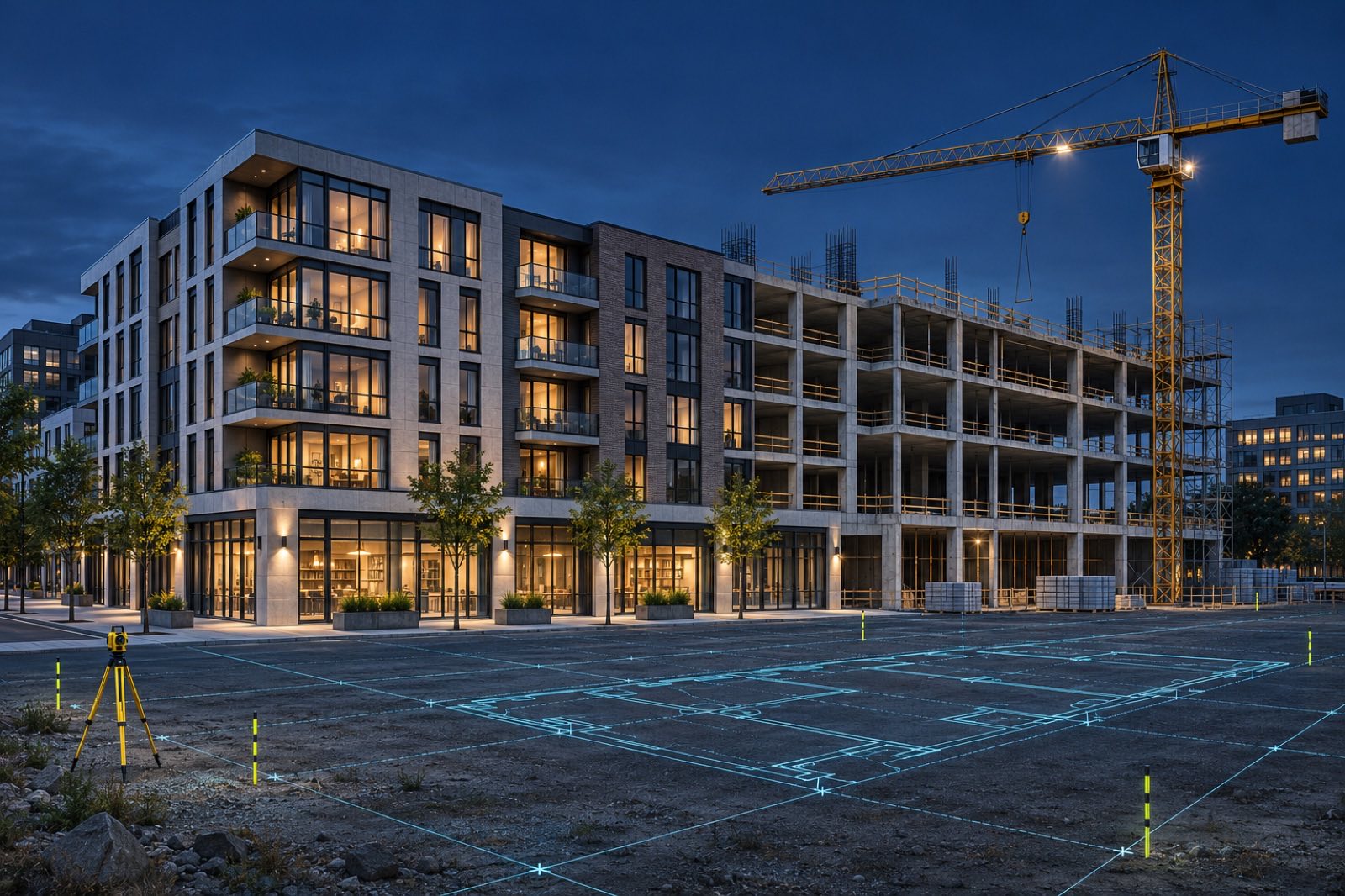
Sheet 01 · An independent guide to real estate development
Real estate development is the process of buying land or an existing property, improving it through planning and construction, and then selling or leasing it with the aim of making a profit. Plot to Skyline is an independent educational website that explains this process in plain language. We do not run a development business or accept deals or projects. Our aim is to help you understand how the industry works before you explore the details.
Guides split the work in different ways. In the simplest view there are three phases: pre-development, construction and operation. A finer cut gives eight stages.
01
An idea meets a place: what could be built here, and for whom.
02
Site, program and first sketches take shape, along with the team of architects, engineers and lawyers.
03
Market, site, rules and money are tested before anyone is committed.
04
Entitlements: zoning, density, design and use must be approved before building starts.
05
Equity and debt are lined up, usually leaning on the feasibility study.
06
A general contractor and subcontractors turn the drawings into a structure.
07
Spaces are let or sold until the building is occupied and stable.
08
The finished property is run, maintained and, at some point, perhaps sold.
A developer coordinates planning, financing, approvals, construction, and marketing. Usually, the developer first buys a site and identifies the market and intended users, then develops a plan and design for the building. Next come public approvals and financing, followed by construction, leasing, management, and eventually a sale. Each stage requires different decisions, so a developer needs to understand the project from start to finish.
Not every developer handles the entire process. Some find a property, obtain a design and permits, and then sell it to a builder with those in place. A builder who buys a site with permits already in place avoids the risk of those permits being denied. Development companies also vary in size. Some are large and provide services in-house. Others have one owner and a few employees and outsource the remaining work.
A project involves many specialists: architects and landscape architects, civil engineers, planners, market consultants who study demand and project economics, and attorneys who handle contracts and approvals. The team also includes environmental consultants, geotechnical engineers, surveyors, title insurers, and lenders. The general contractor hires subcontractors.
Real estate development is therefore as much about managing a team as it is about construction.
A development is rarely paid for with one kind of money. The capital stack orders each source by who gets repaid first. The lower the layer, the safer it is; the higher the layer, the more risk it carries.
An explanation of terms, not financial advice.
Paid last, carries the first loss. The owner's and investors' own money.
Sits between debt and equity. Repaid only after senior lenders, so it costs more.
First in line for repayment, often a construction loan from a bank or other lender.
Developers make money when income from selling or leasing a finished property exceeds its costs. Some also charge fees for managing a project. Developers usually take on substantial financial risk. Land development is especially risky because it depends on outside approvals and infrastructure and often involves a long period without income.
The industry is also debated. Critics link it to urban sprawl and environmental damage, while supporters point to increased housing supply, lower housing costs, economic growth, and jobs. We describe both sides without taking a position.
Mixed-use projects combine housing, retail, offices, and entertainment. Entertainment districts and stadium districts are one type. These projects need the same coordination as other developments, but on a larger scale.
Plot to Skyline is an independent educational website about real estate development. We do not offer investments, give advice, or accept deals or projects. We want anyone to be able to learn how the process works without pressure to invest. Our materials are educational and are not a substitute for investment advice.
Our site has five guides. They cover the stages of the development process, feasibility studies, development financing, mixed-use development, and entertainment districts and stadiums. Each guide explores a topic introduced here.
To learn how real estate development works step by step, read the site's guides.
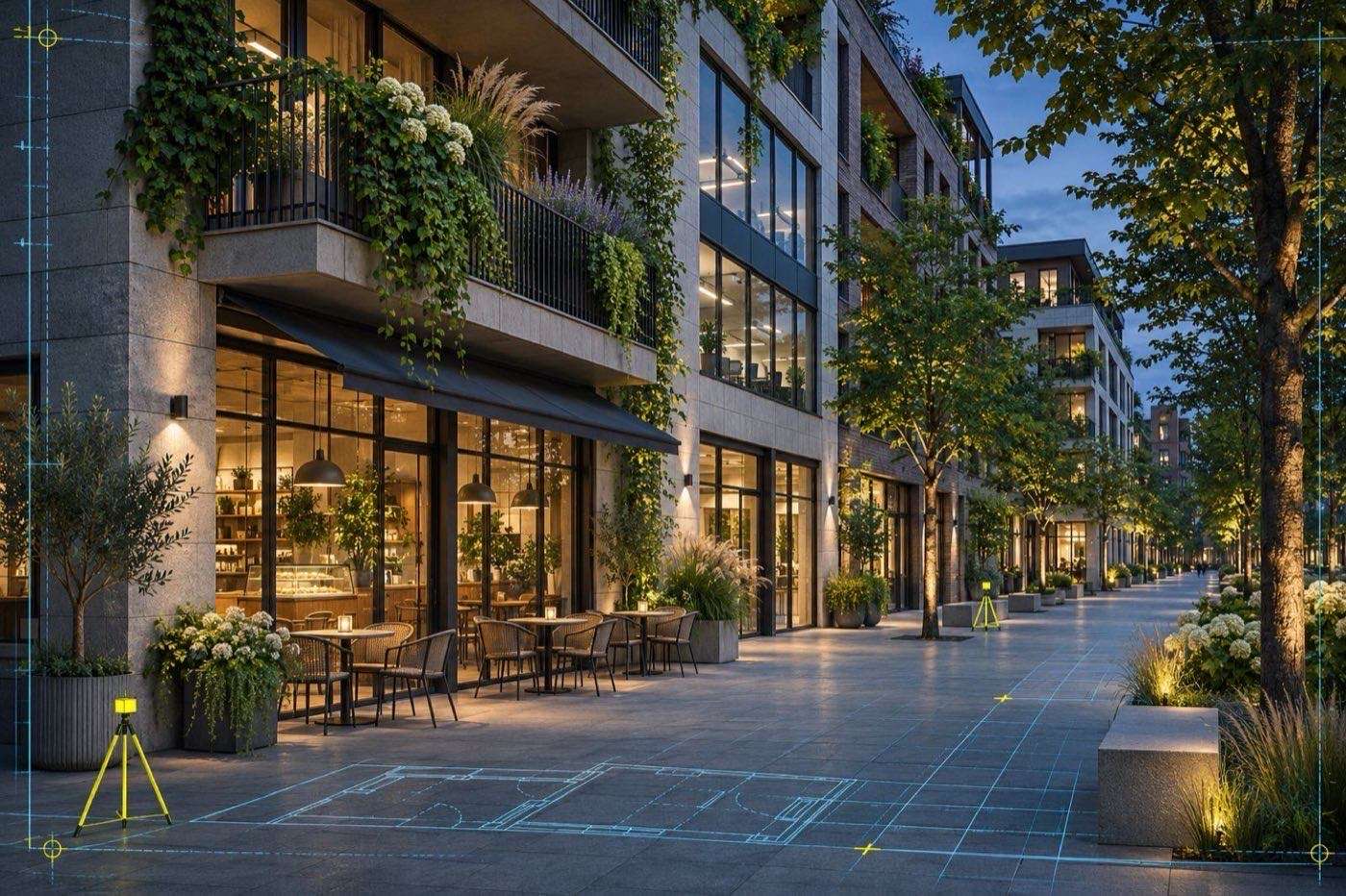
Mixed-use development stacks or places several uses side by side. Where an office street empties after eight hours, a mixed street can stay busy for eighteen.
Each guide follows one part of the drawing set, from the order of the stages to the districts built around arenas.
Sheet 02
The real estate development process step by step: idea, site, feasibility, entitlements, financing, design, construction, leasing and operation.
Read the guideSheet 03
What a feasibility study for real estate development covers: market, site, zoning, highest and best use, the pro forma and the go or no go decision.
Read the guideSheet 04
How real estate development is financed: equity and debt, construction loans, mezzanine capital and the capital stack, explained without investment advice.
Read the guideSheet 05
What mixed-use development means, vertical and horizontal types, mixed-use zoning, benefits and drawbacks, with examples.
Read the guideSheet 06
What an entertainment district is, how sports-anchored stadium districts are developed and financed, examples and the pros and cons for cities.
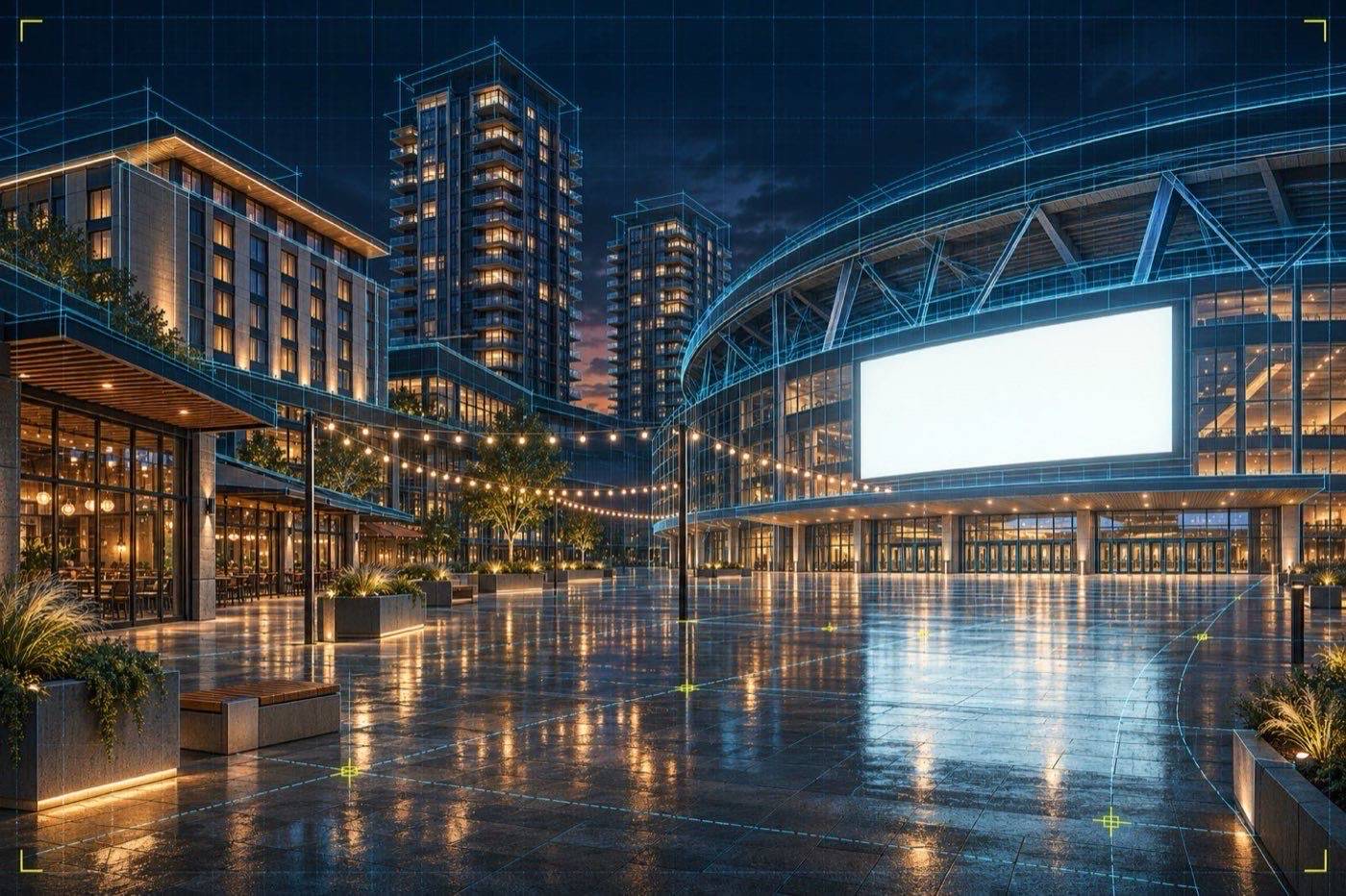
Read the guideEntertainment districts gather theatres, cinemas, venues, bars and restaurants in one area. A newer variant is the stadium district: shops, offices, hotels, homes and public squares built around an arena, so the area stays busy on days without a game.