Sheet 06
Entertainment district development: beyond game night
Entertainment and stadium districts often come up when cities discuss financing sports venues. The area around Nationwide Arena in Columbus, Ohio, completed in 2000, is regarded as the first district built around a sports venue. How did these places develop, and why is their financing discussed so often? This guide explains how they work and who pays for them.
What is an entertainment district?
An entertainment district is a type of arts district with a high concentration of movie theaters, theaters and other entertainment venues. Local authorities can formally designate it through zoning rules, and public and private investment gives it a distinctive look. It is also a form of mixed-use development, which combines different uses on one site.
Examples include the Las Vegas Strip, Beale Street in Memphis, Bourbon Street in New Orleans, the Quartier des Spectacles in Montreal, Soho in London and Kabukicho in Tokyo.
Pros and cons of entertainment districts
Entertainment districts support city centers through tourism and retail.
They also draw crowds, which require safety management, especially around clubs and bars. Any assessment should consider both the benefits and the challenges.
What is a stadium district?
A stadium district is a mixed-use area with retail and entertainment around a large stadium or arena. The term can also refer to a special legal district established to finance and maintain a stadium. When reading about stadium districts, check whether the term refers to a physical area or a legal district.
Colorado provides an example of the second type. In 1989, the state legislature created a stadium district with the power to levy a tax in seven counties of the Denver metropolitan area to build Coors Field. In 1991, the Maricopa County Stadium District was created in Arizona.
Who pays for a stadium, and what gets built around it?
In the 2000s and 2010s, cities grew increasingly reluctant to use tax revenue to fund stadiums. Developers responded by proposing shops, entertainment venues, offices and housing around the stadiums. These areas were intended to generate tax revenue for the sports facility and encourage visitors to stay beyond a single game.
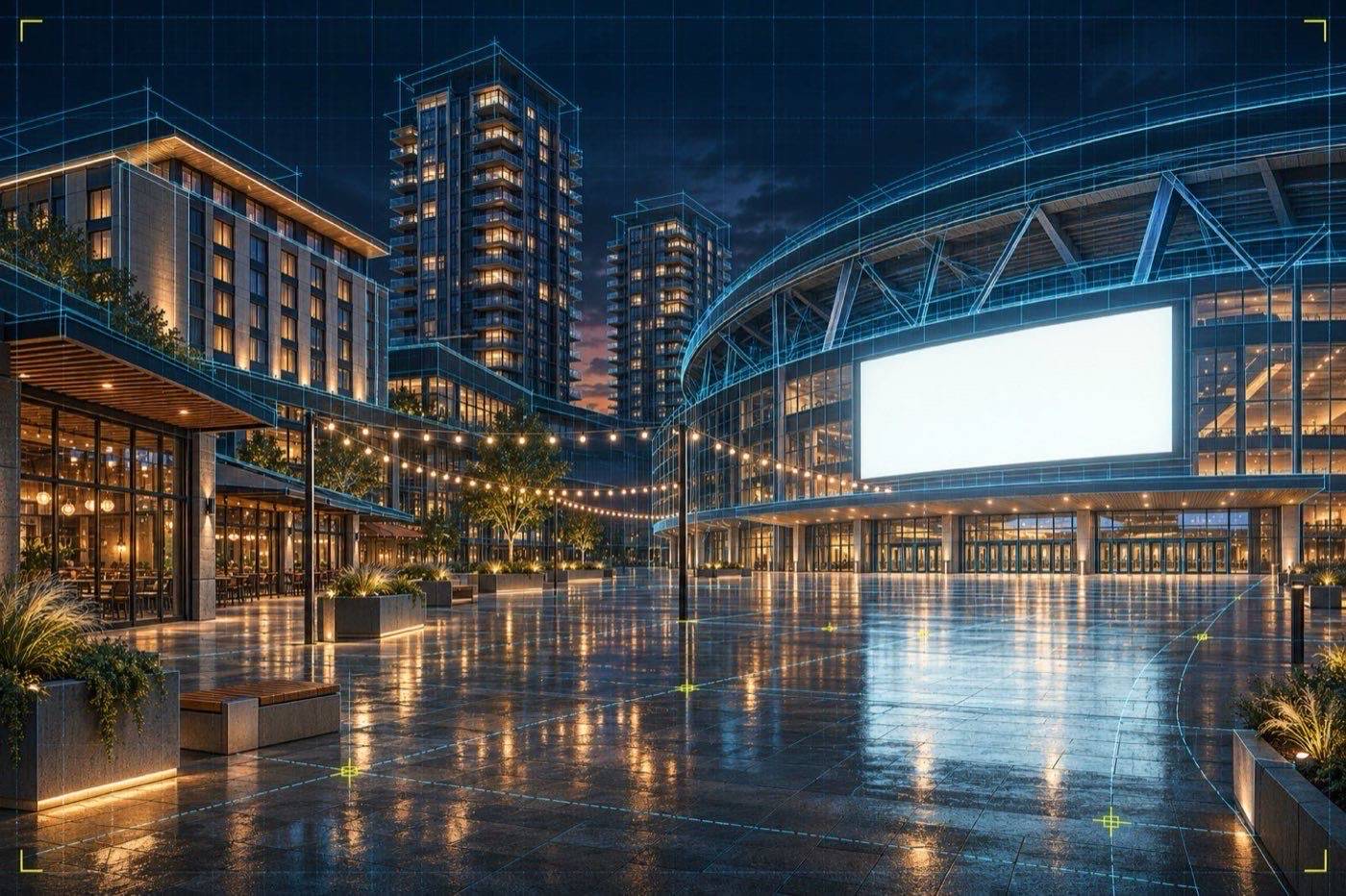
Stadium districts therefore combine public plazas, offices, hotels, housing and additional event spaces. The goal is to keep the area active throughout the year and the day, beyond game days. Examples include L.A. Live in Los Angeles, the Deer District in Milwaukee, The Battery Atlanta, Texas Live! in Arlington and the Ice District in Edmonton.
These projects do not always go smoothly. Financing problems and environmental concerns delayed the start of construction on a similar development around Petco Park in San Diego for 17 years. In the 2020s, universities also began creating mixed-use districts to fund their athletic departments.
Summary
Entertainment districts support city centers through tourism and retail, but their crowds require safety management. Stadium districts grew out of cities' reluctance to use tax revenue to fund venues. They combine entertainment, offices, hotels and housing around a sports venue. To learn about the broader category these districts belong to, read about mixed-use development.